Thursday, December 22, 2011

Not so civil, please!


When did we become such compliant people?
One of the most striking aspects of COP17 in Durban early this month was the relative tameness of the protests. Altjhough I was told by one policeman at the Global Day of Action that “these people can be dangerous, you know”, little sign of that was seen. And on the night of 9 December, when a number of people seemed keen to occupy the precinct to make their voices heard by the negotiators, the protest seems to have been rather peacefully organised and negotiated away.
Meanwhile, here in Johannesburg, citizens are enraged that we’ve had a road tolling system imposed on us without consultation, which will become active in February. This will significantly increase commuting costs. (Under other circumstances, I’d be in favour of something like this – it’s one of a number of tactics necessary to reduce the number of cars on the road and boost use of public transport. But because, a) public transport is poor, with trains and buses only on limited routes, and minibus taxis notoriously unsafe and driven by badly trained drivers and b) there’s been a huge lack of transparency in the process, it makes me as angry as the next resident.)
It’s a situation that screams for civil disobedience. If even ten percent of vehicles refuse to install the new ‘e-tag’ licence plates necessary for smooth processing, and then refuse to pay fines, the entire system would freeze within a month or two. Yet I have heard many people discussing this, on talk radio and in public spaces, wondering if it’s okay to do something illegal. Does civil disobedience not have to be “within the law”, I heard one person ask.
Good grief, and you live in South Africa, where we have a splendid record of civil disobedience! That’s what civil disobedience IS: a campaign in which numbers of people state that they will disobey laws or regulations with a certain end in mind – usually it’s getting those laws off the statute books. When people burnt their passes, it was an act of civil disobedience, and very much illegal, with the aim of getting the laws about the dompas wiped out.
The roots of a police state are not the apparatus thereof, it’s the willingness of the people to ‘go along’, to accept, to be policed. That, in my view, was the mindset shown on 9 December: security says we must get out of the building, so let’s negotiate the best way to do this. (To be fair, though, I wasn’t there, not being accredited to the UN precinct, so there may have been circumstances I’m not aware of.)
It’s not the negotiators who get us places, in my experience. They’re very useful once the wall has been partially smashed, once the square has been occupied… but action is necessary to shift the blockages. If we want to change the world, we need to grow some more spine!
“Civil disobedience is the active, professed refusal to obey certain laws, demands, and commands of a government, or of an occupying international power. Civil disobedience is commonly, though not always, defined as being nonviolent resistance. It is one form of civil resistance.” (Wikipedia)
“…the refusal to obey certain laws or governmental demands for the purpose of influencing legislation or government policy, characterized by the employment of such nonviolent techniques as boycotting, picketing, and nonpayment of taxes.” (dictoionary.com)

Sunday, December 18, 2011

But hey, let's wait till 2020!


Caption:
A Southern Right Whale off Gansbaai, South Africa - one of the many creatures who are at risk along with Homo sap.

Here's more news which has long been expected, and should have given the suits at COP17 a sense of urgency. But will anything light a fire under the tails of governments and corporates?

Shock as Retreat of Arctic Sea Ice Releases Deadly Greenhouse Gas
Russian research team astonished after finding 'fountains' of methane bubbling to surface
by Steve Connor

Dramatic and unprecedented plumes of methane – a greenhouse gas 20 times more potent than carbon dioxide – have been seen bubbling to the surface of the Arctic Ocean by scientists undertaking an extensive survey of the region.

The scale and volume of the methane release has astonished the head of the Russian research team who has been surveying the seabed of the East Siberian Arctic Shelf off northern Russia for nearly 20 years.

In an exclusive interview with The Independent, Igor Semiletov, of the Far Eastern branch of the Russian Academy of Sciences, said that he has never before witnessed the scale and force of the methane being released from beneath the Arctic seabed.

"Earlier we found torch-like structures like this but they were only tens of metres in diameter. This is the first time that we've found continuous, powerful and impressive seeping structures, more than 1,000 metres in diameter. It's amazing," Dr Semiletov said. "I was most impressed by the sheer scale and high density of the plumes. Over a relatively small area we found more than 100, but over a wider area there should be thousands of them."

Scientists estimate that there are hundreds of millions of tonnes of methane gas locked away beneath the Arctic permafrost, which extends from the mainland into the seabed of the relatively shallow sea of the East Siberian Arctic Shelf. One of the greatest fears is that with the disappearance of the Arctic sea-ice in summer, and rapidly rising temperatures across the entire region, which are already melting the Siberian permafrost, the trapped methane could be suddenly released into the atmosphere leading to rapid and severe climate change.

Dr Semiletov's team published a study in 2010 estimating that the methane emissions from this region were about eight million tonnes a year, but the latest expedition suggests this is a significant underestimate of the phenomenon.

In late summer, the Russian research vessel Academician Lavrentiev conducted an extensive survey of about 10,000 square miles of sea off the East Siberian coast. Scientists deployed four highly sensitive instruments, both seismic and acoustic, to monitor the "fountains" or plumes of methane bubbles rising to the sea surface from beneath the seabed.

"In a very small area, less than 10,000 square miles, we have counted more than 100 fountains, or torch-like structures, bubbling through the water column and injected directly into the atmosphere from the seabed," Dr Semiletov said. "We carried out checks at about 115 stationary points and discovered methane fields of a fantastic scale – I think on a scale not seen before. Some plumes were a kilometre or more wide and the emissions went directly into the atmosphere – the concentration was a hundred times higher than normal."

Dr Semiletov released his findings for the first time last week at the American Geophysical Union meeting in San Francisco.
(The Independent, 14 December 2011)

Saturday, December 17, 2011

Citizens get it - their governments don't


A recent survey by Yale University’s Project on Climate Change Communication and the George Mason University Center for Climate Change Communication found that 65 percent of Americans polled “said that global warming is affecting weather in the United States”; half believe it is caused “mostly by human activities,” up 3 points since May. A similar survey by the nonprofit environmental group ecoAmerica found that 57 percent of Americans realize, “If we don’t do something about climate change now, we can end up having our farmland turned to desert.” (From Salon.com, 16 Dec 2011)
According to the latest Eurobarometer opinion poll (October 2011), 68% of Europeans polled consider climate change a very serious problem (up from 64% in 2009). Altogether 89% see it as a serious problem (either 'very serious' or 'fairly serious'). On a scale of 1 (least) to 10 (most), the seriousness of climate change is ranked at 7.4, against 7.1 in 2009. (From Media Lens, 17 Dec 2011)

Tuesday, December 13, 2011

Nice work if you can get it


If you've attended every single one of the UNFCCC's Conference's of the Parties since the first in 1995, you'll have visited:
Berlin, Germany
Geneva, Switzerland
Kyoto, Japan
Buenos Aires, Argentina
Bonn, Germany
The Hague, Netherlands
Bonn again (lol!)
Marrakech, Morocco,
New Delhi, India
Milan, Italy
Buenos Aires again
Montreal, Canada
Nairobi, Kenya
Bali, Indonesia
Poznan, Poland
Copenhagen, Denmark
Cancun, Mexico
Durban, South Africa
And joy of joys, the next one will take you to Qatar in the Middle East, where the temperatures late in the year will be in the upper twenties Celsius (good thing it won't happen in July, when 41 degrees is the daily average high). In 2005, Qatar had the highest per capita carbon emissions, at 55.5 tons, so COP18 will take place right in the hot-spot in many ways. Women can legally drive in Qatar, which will make life easier for delegates, but for NGOs and protesters, be aware that the death penalty is used 'mainly for threats against national security'.
Nice work if you can get it. A sort of temperature-tourism. All paid for by taxpayers. (In Durban's case, stories surfaced in the immediate aftermath of COP17 teasing out exactly how many millions of tourist dollars the moveable feast had brought to Durban, as delegates ate, drank and bought the obligatory soapstone carvings and beadwork necklaces.)
How long will this circus continue to roam the world? What happened in Durban constitutes a grave threat to the world: we are simply not going to get it together fast enough to deal with anthropogenic global warming. But, as one person said to me, it's "the only game in town". How else, she askedf, are we supposed to get governments and business and all to negotiate and take action?
I believe it's time to deflate the circus tent and take away the clown's unicycle. Change has almost always happened because a groundswell of the people wishes it, not because governments or other major roleplayers do.
Governments have a very short time-horizon: they're looking to the next election. Some corporates have an even shorter one, but in the fossil fuel game, it is quite often longer - if you're mining a seam of coal, you may have to plan for a life of twenty years and up; coal-fired power stations are in operation for forty years and more. But that's not as long as yours and mine: our time horizon should only begin to fade away as our great-grandchildren utter their first cries.
So we need to pick up the reins of power and tell them what we want. We want food, clean water, clean air, health and a stable climate for ourselves and our seed. That is not a political goal: it's one that virtually every person, of every stripe, can share, whether you're a conservative or a radical lefty, Ba'hai or Roman Catholic, farmer or retail assistant.
How can we do this? It will take creativity and guts and commitment, but it can be done - there are examples in history to inspire us. I will be thinking a lot on these lines in the days ahead, and will share my thoughts here. ("Is there anybody out there?" Pink Floyd)

Sunday, December 11, 2011

Deadly delay


After a whole day of driving and not listening to news of any kind as COP17 was coming to its end, I woke up to the depressing yet expected news that real action will be delayed until 2020.
I can only quote Professor Hugh Montgomery again: "If we delay writing a prescription for eight years, we will find ourself writing a death certfificate instead".
Below is Climate Justice Now!'s statement:

2011 COP17 succumbs to Climate Apartheid!
Dec 11

Antidote is Cochabamba Peoples’ Agreement!

CJN! Press release, 10 December, Durban, S. Africa

Decisions resulting from the UN COP17 climate summit in Durban constitute a crime against humanity, according to Climate Justice Now! a broad coalition of social movements and civil society. Here in South Africa, where the world was inspired by the liberation struggle of the country’s black majority, the richest nations have cynically created a new regime of climate apartheid

“Delaying real action until 2020 is a crime of global proportions,” said Nnimmo Bassey, Chair of Friends of the Earth International. “An increase in global temperatures of 4 degrees Celsius, permitted under this plan, is a death sentence for Africa, Small Island States, and the poor and vulnerable worldwide. This summit has amplified climate apartheid, whereby the richest 1% of the world have decided that it is acceptable to sacrifice the 99%.”

According to Pablo Solón, former lead negotiator for the Plurinational State of Bolivia, “It is false to say that a second commitment period of the Kyoto Protocol has been adopted in Durban. The actual decision has merely been postponed to the next COP, with no commitments for emission reductions from rich countries. This means that the Kyoto Protocol will be on life support until it is replaced by a new agreement that will be even weaker.”

The world’s polluters have blocked real action and have once again chosen to bail out investors and banks by expanding the now-crashing carbon markets – which like all financial market activities these days, appear to mainly enrich a select few.

“What some see as inaction is in fact a demonstration of the palpable failure of our current economic system to address economic, social or environmental crises,” said Janet Redman, of the Washington- based Institute for Policy Studies. “Banks that caused the financial crisis are now making bonanza profits speculating on our planet’s future. The financial sector, driven into a corner, is seeking a way out by developing ever newer commodities to prop up a failing system.”

Despite talk of a “roadmap” offered up by the EU, the failure in Durban shows that this is a cul-de-sac, a road to nowhere. Spokespeople for Climate Justice Now! call on the world community to remember that a real climate program, based on planetary needs identified by scientists as well as by a mandate of popular movements, emerged at the World People’s Summit on Climate Change and Mother Earth in Bolivia in 2010. The Cochabamba People’s Agreement, brought before the UN but erased from the negotiating text, offers a just and effective way forward that is desperately needed.

For more information, contact: Mike Dorsey – mkdorsey@professordorsey.com, or call+27 (0)79 863 8756 or +1-734-945-6424 Nick Buxton – nick@tni.org or call +27(0)81 589 8564 or +1 530 902 3772 ADDITIONAL

BACKGROUND

On technology

“The technology discussions have been hijacked by industrialized countries speaking on behalf of their transnational corporations,” said Silvia Ribeiro from the international organization ETC Group. Critique of monopoly patents on technologies, and the environmental, social and cultural evaluation of technologies have been taken out of the Durban outcome. Without addressing these fundamental concerns, the new technology mechanism will merely be a global marketing arm to increase the profit of transnational corporations by selling dangerous technologies to countries of the South, such as nanotechnology, synthetic biology or geoengineering technologies.”

On agriculture

“The only way forward for agriculture is to support agro-ecological solutions, and to keep agriculture out of the carbon market,” said Alberto Gomez, North American Coordinator for La Via Campesina, the world’s largest movement of peasant farmers. “Corporate Agribusiness, through its social, economic, and cultural model of production, is one of the principal causes of climate change and increased hunger. We therefore reject Free Trade Agreements, Association Agreements, and all forms of the application of Intellectual Property Rights to life, current technological packages (agrochemicals, genetic modification) and those that offer false solutions (biofuels, nanotechnology, and climate smart agriculture) that only exacerbate the current crisis.”

On REDD + and forest carbon projects

“REDD+ threatens the survival of Indigenous Peoples and forest-dependent communities. Mounting evidence shows that Indigenous Peoples are being subjected to violations of their rights as a result of the implementation of REDD+-type programs and policies,” declared The Global Alliance of Indigenous Peoples and Local Communities against REDD and for Life. Their statement, released during the first week of COP17, declares that “REDD+ and the Clean Development Mechanism (CDM) promote the privatization and commodification of forests, trees and air through carbon markets and offsets from forests, soils, agriculture and could even include the oceans. We denounce carbon markets as a hypocrisy that will not stop global warming.”

On the World Bank and the Global Climate Fund

“The World Bank is a villain of the failed neoliberal economy,” says Teresa Almaguer of Grassroots Global Justice Alliance in the U.S. “We need a climate fund managed by participatory governance, not by an anti-democratic institution that is responsible for much of the climate disruption and poverty in the world.” “The Green Climate Fund has been turned into the Greedy Corporate Fund,” said Lidy Nacpil, of Jubilee South. “The fund has been hijacked by the rich countries, on their terms, and set up to provide more profits to the private sector”

On the Green Economy

“We need a climate fund that provides finance for peoples of developing countries that is fully independent from undemocratic institutions like the World Bank. The Bank has a long track record of financing projects that exacerbate climate disruption and poverty” said Lidy Nacpil, of Jubilee South. “The fund is being hijacked by the rich countries, setting up the World Bank as interim trustee and providing direct access to money meant for developing countries to the private sector. It should be called the Greedy Corporate Fund!”

Climate policy is making a radical shift towards the so-called “green economy,” dangerously reducing ethical commitments and historical responsibility to an economic calculation on cost-effectiveness, trade and investment opportunities. Mitigation and adaption should not be treated as a business nor have its financing conditioned by private sector and profit-oriented logic. Life is not for sale.

On climate debt

“Industrialized northern countries are morally and legally obligated to repay their climate debt,” said Janet Redman, Co-director of the Sustainable Energy & Economy Network at the Institute for Policy Studies. “Developed countries grew rich at the expense of the planet and the future all people by exploiting cheap coal and oil. They must pay for the resulting loss and damages, dramatically reduce emissions now, and financially support developing countries to shift to clean energy pathways.”

Developed countries, in assuming their historical responsibility, must honor their climate debt in all its dimensions as the basis for a just, effective, and scientific solution. The focus must not be only on financial compensation, but also on restorative justice, understood as the restitution of integrity to our Mother Earth and all its beings. We call on developed countries to commit themselves to action. Only this could perhaps rebuild the trust that has been broken and enable the process to move forward.

On real solutions

“The only real solution to climate change is to leave the oil in the soil, coal in the hole and tar sands in the land. “ Ivonne Yanez, Acción Ecologica, Ecuador

For more information, contact:

Mike Dorsey – mkdorsey@professordorsey.com, or call+27 (0)79 863 8756 or +1-734-945-6424

Nick Buxton – nick@tni.orgor call +27(0)81 589 8564 or +1 530 902 3772

Friday, December 9, 2011

Whose process is this?

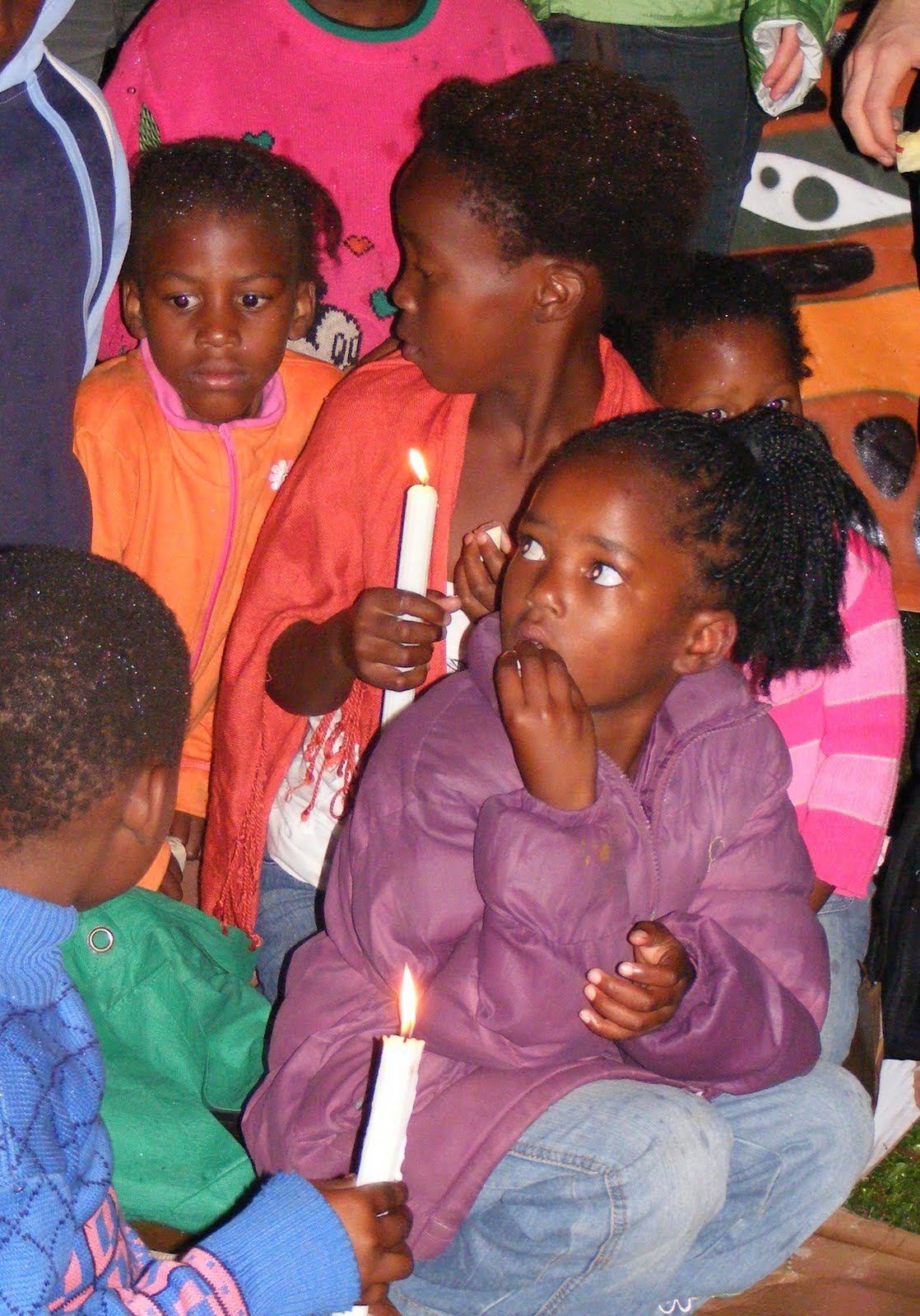
Captions: Bobby Peek of groundWork addresses the last remaining activists on 9 December; Africa will be hardest hit; some youngsters joined the all-night vigil, under tarpaulin due to the rain.


The Conference of the Parties is winding to a close. We've seen a document which suggests that the result will be the launching of "a process in order to develop a legal framework applicable to all" (this, of course, means developed and developing countries), a framework agreement committing countries to new targets to cut greenhouse gas emissions, "after 2020". Yippee. This puts us on course to (at least) hit a global increase of 4 degrees, which means 8 for us in southern Africa.
As one woman said at the traditional all-night vigil which started at 7:00 pm (she's been to three COPs and attended vigils at each one), "If this isn't working" - as plainly, after 17 years, it isn't - "then what do we do?"
I doffed my journalist's hat and made an activist's plea. Let's take it away from them, I said. Let's mobilise people to put pressure on them - the governments and corporates inside the UN precinct. They live, breathe and make money off us, so we do have power over them. Civil disobedience campaigns, boycotts, persistent picketting, we've used them before with success. "Never doubt that a small group of thoughtful, committed people can change the world. Indeed, it is the only thing that ever has." (Margaret Mead)
We just have to get the message through to people that this is not a political cause, this is about things that do and will matter to them where they live: food, water, air, health, life. Understand that, and massive mobilisation is possible. It's time to tell those who are delaying and backing and filling that we have withdrawn their permits, their rights to act against our common interests. Panzi! Vamos!
Siyaya!

Open letter to the Inside from the Outside

I received this today, the last day of COP17. I will attend tonight's vigil and hope against hope...

An Open Letter to the Delegates at COP17
(to be read on human microphone)
Can you hear me? /
Are you listening? /
These words / are not my own. / They are the voice / of the voiceless. / I speak to you, / not as a nation –/ but as the unheard majority of this planet – / the youth who are inheriting a system / we will not accept. / And I speak to you, / with the authority of every child / yet to be born. / The future belongs to them / not you.
We speak to you now / not as delegates of nations / but as people / as fellow humans – / so that your own hearts may speak truth. / For if you let a single word escape your lips / that does harm to your own conscience/ and to the rights / of all future generations –/ then you have no authority,/ for you know no justice./ And may the weight of the floods, / of the droughts,/ of the storms / and of the deaths –/ be upon your shoulders, / and upon your conscience/ from this day forth / For you held back the tides of change.
For 16 years / you have not heard us -/ so we are no longer asking. / The future of the 99% / will not be written by your documents,/ but by our actions. / You cannot stop an idea whose time has come / you cannot stop an idea whose time has come. / So speak your heart / for there is no choice now / but change.